Sepsis Mortality Statistics: What the Data Shows
Sepsis mortality statistics from CDC, Lancet, and clinical trials: 270,000 US deaths, 11 million globally, and how treatment advances have changed outcomes since 1991.
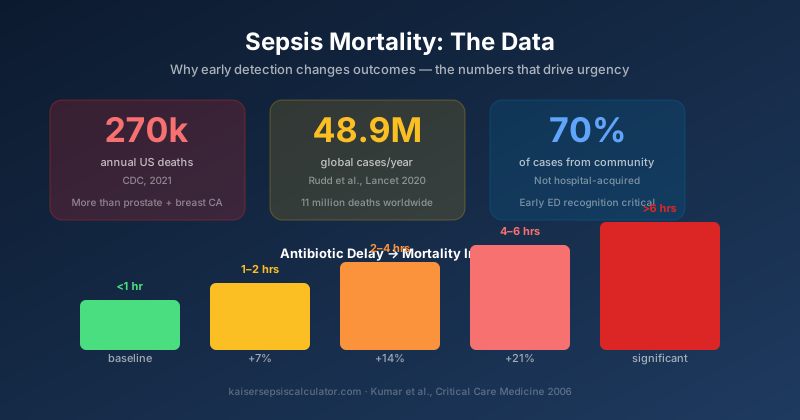
Sepsis isn't a rare condition or an edge case in emergency medicine. It's the leading cause of death in US hospitals, accounting for more deaths annually than prostate cancer, breast cancer, and AIDS combined. Understanding the scope of that burden, and what the data shows about where outcomes have improved and where gaps remain, is essential for clinicians, administrators, and policymakers alike.
The US Burden: Scale and Trend
The most widely cited US figures come from the Centers for Disease Control and Prevention. In their 2020 data summary:
- 1.7 million adults develop sepsis in the United States each year
- 270,000 Americans die from sepsis annually
- Sepsis is a contributing factor in approximately 35% of all in-hospital deaths
- 1 in 3 patients who die in a hospital has sepsis
These numbers have been relatively stable over the past decade, though the apparent stability masks a complex underlying trend: the raw count of sepsis cases has risen as the population ages and as sicker patients survive long enough to be hospitalized with more comorbidities. At the same time, age-adjusted sepsis mortality has declined significantly, reflecting genuine improvements in recognition and treatment.
The CDC data are drawn from administrative claims, which use ICD-10 diagnostic codes to identify sepsis hospitalizations. This methodology has known limitations (coding practices vary by institution and over time), but the magnitude of the numbers isn't seriously disputed.
The Global Burden: Rudd et al. Lancet 2020
The most rigorous estimate of global sepsis burden was published by Rudd et al. in *The Lancet* in January 2020. Using Global Burden of Disease methodology across 195 countries, the study estimated:
- 48.9 million cases of sepsis globally in 2017
- 11 million sepsis-related deaths in 2017, representing 19.7% of all global deaths
- Highest burden in sub-Saharan Africa, Oceania, and South Asia
- Neonatal sepsis contributing disproportionately in low-income countries
The 11 million figure was substantially higher than previous WHO estimates and prompted the World Health Organization to adopt a sepsis resolution in 2017, calling for improved surveillance, prevention, and management globally. The true number may be even higher. Most low-income countries lack the healthcare infrastructure to accurately identify and record sepsis deaths.
The Rudd et al. findings placed sepsis in the same mortality tier as ischemic heart disease and stroke (the leading individual causes of death worldwide), making it a global health emergency rather than a niche critical care problem.
In-Hospital Mortality by Severity
The probability of dying in the hospital depends substantially on where in the sepsis spectrum the patient presents. Using Sepsis-3 definitions and data from large US and European cohort studies:
Sepsis (organ dysfunction present, no shock): In-hospital mortality approximately 10–20%. The Shankar-Hari et al. analysis (JAMA, 2016) of the Sepsis-3 task force dataset found mortality in the sepsis-without-shock group at approximately 17% in the US health system cohort.
Septic shock (vasopressor dependence + lactate >2 mmol/L after resuscitation): In-hospital mortality approximately 40–45% in high-income country ICUs. The same Shankar-Hari analysis found septic shock mortality at 42.3%.
Under the old Sepsis-2 definitions, "severe sepsis" (now simply called sepsis) carried mortality estimates of 20–30% in most series. The elimination of that category in Sepsis-3 made direct historical comparison difficult but also eliminated the heterogeneity that made "severe sepsis" a poorly defined outcome predictor.
Organ system involvement modifies these averages substantially:
- Sepsis with acute kidney injury alone: approximately 15–25% mortality
- Sepsis with two failing organ systems: approximately 30–40%
- Sepsis with four or more failing organ systems: mortality exceeding 60%
The number of failing organ systems, captured by the SOFA score, remains one of the strongest individual predictors of in-hospital death in sepsis. Each additional SOFA point above the baseline is associated with approximately 5–10% additional mortality risk in some cohorts.
Use our bedside screening tool to work through SIRS and organ dysfunction criteria for a structured initial assessment.
The Improvement Over Time
The trend data on sepsis mortality is one of the genuine success stories in critical care medicine, though it requires careful interpretation.
A landmark analysis by Kaukonen et al. (*NEJM*, 2014) examined over 100,000 sepsis admissions to Australian and New Zealand ICUs between 2000 and 2012. Risk-adjusted mortality fell from approximately 35% to 18.4% over 12 years, a 47% relative reduction. The decline occurred despite rising severity of illness scores at admission, suggesting a true improvement in care rather than changes in case mix.
In the United States, Gaieski et al. (*Critical Care Medicine*, 2013) analyzed national inpatient databases and found age-adjusted septicemia mortality declining from approximately 16.7% in 1999 to 13.9% in 2008. That trend has continued in subsequent years.
A 2020 analysis by Rhee et al. in *JAMA* examined trends from 1991 to 2018 in four large US health systems. They found:
- Sepsis incidence remained relatively stable (adjusting for coding changes)
- In-hospital mortality for sepsis fell by approximately 60% over the study period
- Much of the improvement occurred before the Surviving Sepsis Campaign bundles were implemented, suggesting that general quality improvements (better nursing ratios, broader critical care training, improved diagnostic technology) contributed alongside specific sepsis protocols
The 60% relative mortality reduction over 27 years represents millions of lives saved. It also means that current outcomes, while still unacceptably high, reflect real clinical progress.
Factors That Drive Outcomes
The survival literature consistently identifies the same variables as the strongest predictors of sepsis outcomes:
Time to antibiotics. Kumar et al. (*Critical Care Medicine*, 2006) found that each hour of delay in effective antibiotic administration in septic shock was associated with a 7.6% average decrease in survival. More recent data from New York State's mandatory sepsis reporting initiative confirmed that antibiotic administration within 3 hours of sepsis recognition was independently associated with lower in-hospital mortality (Seymour et al., *NEJM*, 2017).
Fluid resuscitation adequacy. Early adequate fluid resuscitation reduces the degree of tissue hypoperfusion and protects against acute kidney injury. The optimal volume and timing remain debated. The SMART trial and CLASSIC trial data support more conservative strategies in select patients, but severe under-resuscitation is clearly harmful.
Lactate clearance. A lactate that fails to fall ≥10% over 2 hours of resuscitation is associated with significantly higher mortality, independent of absolute values (Jones et al., *JAMA*, 2010). Lactate-guided resuscitation is now a standard component of most institutional protocols.
Institutional resources and ICU availability. Sepsis mortality is consistently lower at academic medical centers, high-volume hospitals, and institutions with 24/7 intensivist coverage. A 2014 analysis in *Critical Care Medicine* found that sepsis patients admitted to teaching hospitals had approximately 10–15% lower mortality than those admitted to non-teaching facilities, after risk adjustment.
Source control. Anatomic sources of infection that require surgical drainage (abscesses, infected prostheses, gangrenous bowel, necrotizing fasciitis) are associated with dramatically higher mortality when source control is delayed. For these patients, antibiotics alone are insufficient.
For a detailed review of what the treatment timeline looks like in practice, the sepsis treatment bundle post covers each Hour-1 Bundle component and its evidence base.
Racial and Socioeconomic Disparities
The mortality data are not equally distributed. Multiple large analyses document persistent racial and socioeconomic disparities in sepsis outcomes in the United States.
Racial disparities: Black patients have consistently higher sepsis incidence and mortality than white patients in US studies. Dombrovskiy et al. (*Critical Care Medicine*, 2007) found sepsis hospitalization rates approximately twice as high in Black patients compared to white patients, with higher mortality at each severity level. A 2018 analysis in *Critical Care Medicine* by Jones et al. found that Black patients were less likely to receive appropriate antibiotics within 3 hours and less likely to have lactate measured in the first hour.
These disparities reflect a combination of factors:
- Higher baseline rates of comorbidities (diabetes, hypertension, CKD) that increase sepsis risk
- Less access to primary care, leading to infections presenting at later stages
- Differences in insurance status affecting ICU-level resource availability
- Potential implicit bias in triage and treatment decision-making
Socioeconomic disparities: Patients in the lowest income quintile have approximately 30–40% higher sepsis mortality than those in the highest quintile in adjusted analyses. Rural patients have worse outcomes than urban patients, partly attributable to longer transport times to high-resource facilities.
Addressing these disparities requires interventions beyond the bedside, including improved insurance coverage, community-based sepsis education, and standardized protocols that reduce the influence of individual provider discretion on time-to-treatment.
Sepsis in Elderly Patients: A Separate Mortality Profile
As covered in our post on sepsis in elderly patients, the mortality differential by age is substantial:
- Patients under 65: in-hospital sepsis mortality approximately 15–20%
- Patients 65–74: approximately 26–30%
- Patients ≥75: approximately 35–50% depending on frailty and comorbidity burden
As the US population ages, the absolute number of elderly sepsis deaths will rise even as age-adjusted rates continue to decline. By 2030, adults over 65 will represent an estimated 20% of the US population, up from 16% today. That demographic trajectory is one of the most significant drivers of future sepsis burden.
ICU Resource Utilization
Sepsis is also one of the most resource-intensive diagnoses in US hospitals:
- Average cost per sepsis hospitalization: approximately $22,000–$32,000 (2018 estimates)
- Approximately 17–26% of ICU bed-days are occupied by sepsis patients
- Sepsis accounts for roughly $24 billion in annual US healthcare costs (Torio & Moore, AHRQ, 2016)
These numbers make sepsis prevention (through vaccination programs, infection control practices, and primary care management of chronic disease) as economically important as it is clinically important.
Post-Sepsis Syndrome: The Hidden Mortality
In-hospital mortality figures understate the full death toll. A substantial proportion of sepsis survivors die within the first year after discharge. Prescott and Angus (*JAMA*, 2018) found that among patients surviving sepsis to hospital discharge, approximately 40% die within 2 years. That's roughly twice the rate of age-matched controls.
Post-sepsis syndrome includes physical, cognitive, and psychological sequelae:
- Persistent muscle weakness and fatigue (ICU-acquired weakness)
- Cognitive impairment, particularly in older survivors
- PTSD and anxiety disorders (affecting approximately 25% of ICU survivors)
- Increased vulnerability to recurrent infections
Many post-sepsis deaths are attributable to functional decline, recurrent infections, and decompensation of underlying comorbidities exacerbated by the acute illness. The true mortality burden of sepsis therefore extends well beyond the in-hospital numbers.
The Path Forward
Three decades of research have produced two clear conclusions. First, sepsis outcomes are substantially better now than they were in 1991, largely because of earlier recognition, standardized treatment protocols, and improvements in supportive care. Second, the current mortality rates remain indefensibly high for a condition that is, in many cases, preventable and treatable.
The variables with the clearest evidence for further improvement are recognition speed and antibiotic timing. Both are directly addressable with better education, screening tools, and clinical protocols. Use the Kaiser Sepsis Calculator to bring structured screening into your clinical workflow.
For more on how this site's content is reviewed for clinical accuracy, visit our editorial methodology page.
Summary
Sepsis kills 270,000 Americans and 11 million people globally each year. In-hospital mortality ranges from 10–20% for sepsis to 40–45% for septic shock. Outcomes have improved by approximately 60% since 1991 in high-income countries, driven by earlier recognition, antibiotic timing, and protocol-driven care. Racial, socioeconomic, and age-related disparities in sepsis outcomes persist and represent the most tractable opportunities for further improvement. Post-sepsis syndrome extends mortality risk well beyond hospital discharge, making the true burden larger than in-hospital statistics alone can capture.