Field Notes on Sepsis.
Evidence-based dispatches on early warning systems, SIRS and qSOFA scoring, treatment bundles, and the Kaiser Permanente SEWS protocol, written for clinicians who work at the bedside.
Sepsis vs. SIRS: What the Difference Means Clinically
Understand the key differences between sepsis vs SIRS, why infection changes everything, and how Sepsis-3 reshaped clinical decision-making.
Read dispatch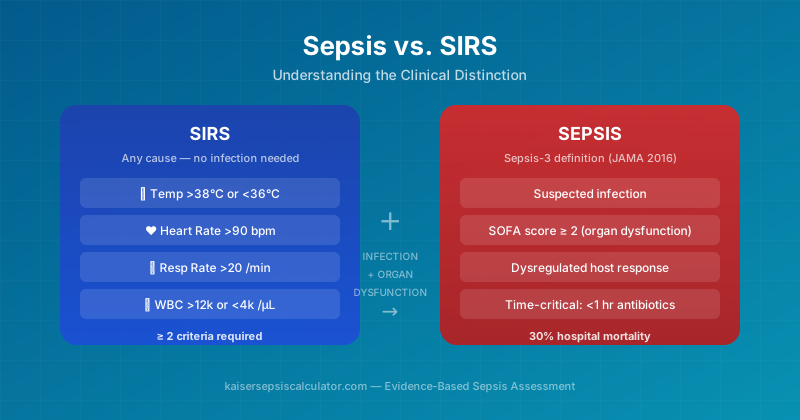
Early Warning Signs of Sepsis: Vital Signs to Watch
Learn the sepsis early warning signs clinicians track: fever, tachycardia, altered mental status, and more. Acting within the first hour saves lives.
SIRS Criteria Explained: 4 Measurements That Flag Risk
SIRS criteria use 4 vital sign and lab thresholds to screen for sepsis risk. Learn each cutoff, how scoring works, and where SIRS has clinical limits.
Kaiser Permanente Sepsis Protocol: How SEWS Works
The Kaiser Permanente sepsis protocol uses a 5-element SEWS screening tool to reduce mortality. Learn how nurses apply it and what outcomes data shows.
How Sepsis-3 Changed the Definition of Sepsis in 2016
The Sepsis-3 definition abandoned SIRS in 2016, replacing it with organ dysfunction via the SOFA score. Learn what Singer et al. changed and why it matters clinically.
qSOFA vs. SIRS Score: Which Screening Tool Wins?
qSOFA vs SIRS compared side-by-side: sensitivity, specificity, clinical use cases, and why Sepsis-3 changed the standard of care.
The Sepsis Treatment Bundle: First 3 Hours Explained
The sepsis treatment bundle covers blood cultures, antibiotics, fluids, and lactate in a tight time window. Learn what each step does and why timing is everything.
Septic Shock vs. Severe Sepsis: The Clinical Spectrum
Septic shock vs severe sepsis explained: why Sepsis-3 eliminated one term, current definitions, mortality rates, and what the clinical spectrum means for treatment.
Sepsis in Elderly Patients: Atypical Signs Clinicians Miss
Sepsis in elderly patients often presents without classic fever or tachycardia. Learn the atypical signs, why standard scoring fails, and how to screen more accurately.
Sepsis Mortality Statistics: What the Data Shows
Sepsis mortality statistics from CDC, Lancet, and clinical trials: 270,000 US deaths, 11 million globally, and how treatment advances have changed outcomes since 1991.