Sepsis in Elderly Patients: Atypical Signs Clinicians Miss
Sepsis in elderly patients often presents without classic fever or tachycardia. Learn the atypical signs, why standard scoring fails, and how to screen more accurately.
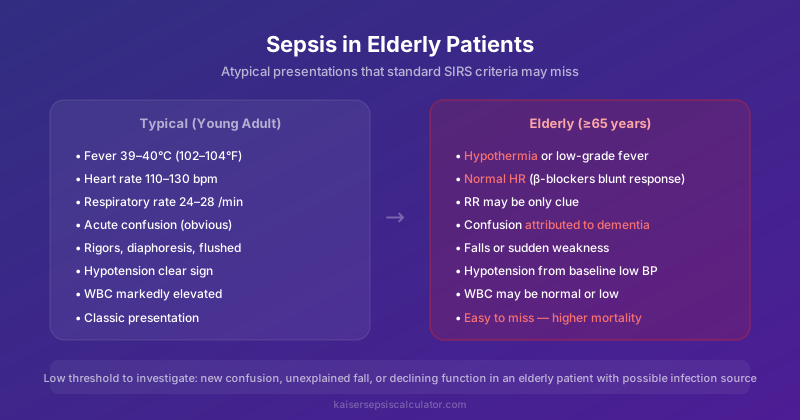
Sepsis in elderly patients kills at roughly twice the rate of sepsis in younger adults. Yet it's also more likely to be missed at first contact, not because the disease is hiding, but because the signs it produces in older physiology don't match the textbook picture most clinicians were trained to recognize.
Age ≥65 accounts for the majority of sepsis hospitalizations in the United States. As that demographic continues to grow, closing the recognition gap in this population is one of the highest-yield opportunities in acute care medicine.
Why Standard Scoring Tools Fail in Elderly Patients
SIRS criteria were designed around a physiological response that requires intact thermoregulation, a functioning bone marrow, and an unimpaired autonomic nervous system. Many elderly patients have none of these in full working order.
Blunted fever response. Core temperature normally rises during infection as part of the acute-phase response mediated by interleukin-1, interleukin-6, and tumor necrosis factor. In older adults, basal metabolic rate declines, thermoregulatory mechanisms are impaired, and cytokine signaling is blunted. Studies show that up to 30% of elderly septic patients are afebrile at presentation, and a significant proportion are frankly hypothermic (temperature <36°C). Hypothermia in the context of suspected infection is a serious sign, not a reassuring one.
A temperature of 37.6°C in an 80-year-old may represent a fever equivalent to 39.2°C in a 30-year-old, because the elderly baseline is typically lower. Using a fixed threshold of 38°C without adjusting for the patient's known baseline can cause SIRS criteria to fail on the temperature component.
Beta-blockers masking tachycardia. SIRS requires heart rate >90 bpm as one of its four criteria. An estimated 30–40% of patients over 65 in the US take beta-blockers for hypertension, atrial fibrillation, or heart failure. Beta-blockade pharmacologically prevents the compensatory tachycardia that normally accompanies infection-driven catecholamine release. A septic 72-year-old on metoprolol 100mg daily may present with a heart rate of 74 bpm (SIRS negative on the heart rate criterion) while in early distributive shock.
The same applies to other rate-limiting medications: calcium channel blockers (diltiazem, verapamil), digoxin, and amiodarone all blunt the heart rate response to physiological stress.
Baseline leukopenia or chronic leukocytosis. Elderly patients with chronic inflammatory conditions (rheumatoid arthritis, COPD, chronic kidney disease) may have persistently elevated white cell counts at baseline. That makes a new leukocytosis indistinguishable from their chronic state. Conversely, patients on immunosuppressive therapy or with hematologic malignancies may never mount the leukocytosis that SIRS requires. Checking a WBC without knowing the patient's baseline is close to useless.
Baseline cognitive changes obscuring altered mentation. The qSOFA criterion for altered mental status requires "new confusion or a change in GCS." In patients with pre-existing dementia, chronic encephalopathy, or baseline delirium-risk, determining whether confusion is new is genuinely difficult. Especially in an emergency department at 3 a.m. without access to prior notes or a reliable historian.
Atypical Presentations That Represent Sepsis
The following presentations in elderly patients warrant a sepsis workup even when classic SIRS criteria are not met:
Acute confusion or delirium. Delirium is one of the most sensitive early markers of physiological derangement in elderly patients. It's also one of the most commonly dismissed as "baseline dementia" or "sundowning." A 2006 retrospective study in *Academic Emergency Medicine* found that altered mental status was the sole presenting complaint in approximately 25% of elderly sepsis patients at ED arrival. Any new or worsening confusion in an older patient should trigger consideration of infection as a precipitant.
Falls without a clear mechanical cause. A fall isn't a random event in an elderly patient. It's a symptom. Orthostatic hypotension from early distributive shock, weakness from myopathy driven by systemic inflammation, and cognitive changes from incipient encephalopathy all increase fall risk before other signs of infection are apparent. Falls presenting to the ED in patients with no obvious mechanical cause should prompt a basic infectious workup.
Functional decline. A family reporting that their 84-year-old mother "just isn't herself," eating less, moving less, sleeping more, is describing a non-specific but clinically meaningful change that frequently precedes a diagnosable infectious process by 12–48 hours. In frail elderly patients, functional decline is often the earliest manifestation of physiological stress.
Hypothermia. As noted above, a temperature below 36°C in an elderly patient isn't an incidental finding. It may indicate sepsis-driven failure of thermoregulatory mechanisms, and its presence in the context of infection carries a higher mortality than fever. One study found hypothermic sepsis presentations were associated with 2–3× higher mortality than normothermic or febrile presentations in elderly cohorts.
Decreased urine output or new incontinence. Early renal hypoperfusion from septic distributive physiology can manifest as oliguria before hypotension becomes apparent. New incontinence, urinary retention, or a significant decrease in urine output in a previously continent patient may indicate early sepsis from a urinary or another source.
Mortality in Elderly Septic Patients
The mortality differential is stark and well-documented.
In the general adult population, in-hospital sepsis mortality under Sepsis-3 criteria runs approximately 10–20%, with septic shock mortality around 40%. In patients over 65, these numbers climb substantially:
- Age 65–74: sepsis mortality approximately 26–30%
- Age 75–84: sepsis mortality approximately 35–40%
- Age ≥85: sepsis mortality approaching 50% in some series
The Liu et al. analysis of California hospital discharge data (2014) found that among 52,394 sepsis hospitalizations, age ≥65 was an independent predictor of in-hospital mortality with an adjusted odds ratio of approximately 2.4.
These numbers reflect both the biological vulnerability of older patients (less physiological reserve, higher baseline organ dysfunction, reduced immune competence) and the diagnostic delays that result from atypical presentation. Every hour of delayed antibiotic therapy carries roughly a 7% absolute increase in mortality risk in septic shock. In elderly patients, who tolerate that additional time less well, the effect is likely larger.
Use our free sepsis screening tool to run through SIRS criteria adjusted to clinical context. The tool doesn't replace bedside assessment, but it helps structure the evaluation systematically.
Comorbidities That Complicate Scoring
Beyond the pharmacological and physiological factors that blunt SIRS criteria, elderly patients carry comorbidities that confound interpretation of every sepsis score:
Chronic kidney disease elevates baseline creatinine, making acute kidney injury (a key SOFA criterion) harder to detect without access to a reliable baseline value. A creatinine of 2.1 in a patient with CKD stage 3 (baseline 1.9) is very different from the same value in a patient with previously normal renal function.
Chronic liver disease elevates baseline bilirubin. Baseline thrombocytopenia (from liver disease, myelodysplasia, or anticoagulation therapy) confounds the coagulation SOFA domain. Virtually every organ system measured by SOFA has a competing chronic disease explanation in elderly patients.
Malnutrition, extremely common in elderly patients with some studies placing the prevalence at 15–40% in hospitalized patients over 70, reduces albumin levels and affects drug distribution, immune function, and wound healing. Malnourished patients have less reserve to tolerate the physiological insult of infection.
The Frailty Factor
Clinical frailty, distinct from chronological age, has emerged as one of the strongest predictors of sepsis mortality in elderly patients. The Clinical Frailty Scale (CFS) scores patients from 1 (very fit) to 9 (terminally ill). Studies in UK ICUs found that CFS ≥5 (moderately frail) was associated with significantly higher 30-day mortality after sepsis ICU admission, independent of SOFA score and age.
What this means practically: a 75-year-old who is fit, active, and lives independently has a very different prognosis from a 75-year-old who requires assistance with activities of daily living. Applying a single age-based risk adjustment misses this heterogeneity. The best approach assesses frailty directly, using the CFS or a similar validated tool, and incorporates it into goal-of-care conversations.
The intersection of frailty and sepsis outcomes is covered in more depth in our post on hospital sepsis mortality statistics, which includes data on how outcomes vary across age, socioeconomic, and institutional factors.
Modified Assessment Approaches
Given these limitations, what does evidence-based sepsis assessment actually look like in elderly patients?
Use SIRS as a floor, not a ceiling. A SIRS-negative elderly patient with new confusion, a known infectious source, and functional decline should still receive a full sepsis workup. SIRS negativity in this population has a false-negative rate high enough that it cannot function as a rule-out criterion.
Obtain a lactate in any elderly patient with suspected infection. Lactate ≥2 mmol/L identifies tissue hypoperfusion independently of vital signs and can detect early septic shock before hypotension develops. In elderly patients who may never mount tachycardia or fever, lactate is often the clearest signal of physiological compromise.
Compare to the patient's known baseline. Heart rate of 86 in a patient whose baseline is 58 may represent a 48% increase, more significant than heart rate 92 in a patient whose baseline is 78. A mental status change from the patient's known baseline is more meaningful than an absolute GCS score.
Ask the family. No algorithm replaces a rapid collateral history from the person who sees this patient every day. "Is this how she normally acts?" asked of a caregiver or family member is clinical data.
Lower threshold for early blood cultures and empirical antibiotics. Given the mortality differential, most geriatric and infectious disease specialists recommend a lower threshold for initiating empirical antibiotics in elderly patients with suspected sepsis than in younger patients, even when the clinical picture is incomplete. The cost of a false positive (one unnecessary antibiotic course) is lower than the cost of a false negative (missed septic shock) in this population.
For a broader view of early recognition across all patient populations, the post on early warning signs of sepsis covers the initial clinical features that precede confirmed sepsis diagnoses.
What Families and Caregivers Should Know
Elderly patients with sepsis frequently arrive at the emergency department brought by family members or caregivers who have noticed a change but cannot characterize it medically. Equipping these non-clinical observers with actionable recognition criteria is a public health intervention as much as a clinical one.
The message is simple: in an elderly person, any sudden change in mental status, function, or behavior in the context of a recent illness or wound deserves urgent medical attention. Waiting to see if a fever develops, in a population where fever often doesn't develop, is the wrong response.
For a detailed look at how our editorial team selects and reviews clinical sources, visit our about page.
Frailty, Goals of Care, and the Treatment Conversation
Recognizing sepsis in elderly patients also means being prepared for conversations that go beyond the treatment protocol. For moderately or severely frail patients, the Surviving Sepsis Campaign Hour-1 Bundle may not align with the patient's established goals of care. Aggressive resuscitation in a patient with advanced dementia, severe COPD, and metastatic cancer may achieve hemodynamic stabilization while delivering no meaningful quality of life.
These conversations require honest mortality estimates. A frail 82-year-old presenting in septic shock faces a mortality risk exceeding 50% even with full ICU-level care. A CFS score of 7 or 8 combined with septic shock puts mortality estimates above 70% in most published series. Families deserve those numbers, not to discourage treatment, but to make informed decisions.
The Kaiser Sepsis Calculator can help quantify risk as part of that conversation, providing structured criteria rather than vague impressions.
Summary
Sepsis in elderly patients is harder to recognize and deadlier when missed. The physiological changes of aging (blunted fever response, pharmacologically suppressed tachycardia, baseline cognitive changes, and complex comorbidities) all conspire against standard SIRS-based screening. Atypical presentations including delirium, falls, functional decline, and hypothermia may be the only visible signs.
Clinicians working with elderly patients should use SIRS criteria as a lower bound rather than a reliable screen, obtain lactate early, compare findings to baseline, and involve family in the history. The mortality premium for missed or delayed sepsis in patients over 75 is too high for pattern-matching against the textbook presentation.