Sepsis vs. SIRS: What the Difference Means Clinically
Understand the key differences between sepsis vs SIRS, why infection changes everything, and how Sepsis-3 reshaped clinical decision-making.
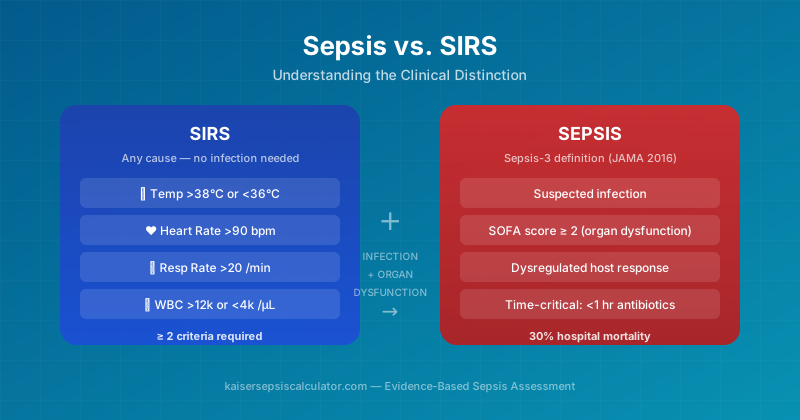
The bedside distinction between SIRS and sepsis is one of the most consequential calls clinicians make. Get it wrong in either direction and the patient pays. Under-triage delays antibiotics. Over-triage floods ICUs and drives unnecessary broad-spectrum coverage.
What SIRS Actually Means
Systemic Inflammatory Response Syndrome was codified at the 1991 ACCP/SCCM Consensus Conference as a way to describe the body's non-specific inflammatory cascade. It requires two or more of four criteria:
- Temperature >38°C (100.4°F) or <36°C (96.8°F)
- Heart rate >90 bpm
- Respiratory rate >20 breaths/min or PaCO₂ <32 mmHg
- White blood cell count >12,000/μL, <4,000/μL, or >10% band forms
Two of four positives means SIRS. That sounds specific, but it isn't. Studies show that up to 93% of ICU patients meet SIRS criteria at some point during their stay, including those admitted after elective surgery or trauma with no infectious etiology whatsoever (Churpek et al., *JAMA Internal Medicine*, 2015).
The problem with SIRS as a sepsis trigger is its staggering breadth. A marathon runner finishing a race meets SIRS criteria. A patient in the first 24 hours post-laparotomy likely meets SIRS criteria. Neither has sepsis.
For a deeper look at the four SIRS parameters and their exact clinical thresholds, see our post on SIRS criteria and how each measurement is scored.
The Infection Requirement That Changes Everything
Under the original 1991 and 2001 consensus definitions, sepsis was defined as SIRS plus a presumed or documented infectious source. That addition (infection) is what separates the two entities conceptually.
In practice, this meant clinicians needed to identify a plausible source: pneumonia, urinary tract infection, cholangitis, infected wound, bacteremia. Without infection, you could have SIRS from pancreatitis, vasculitis, or autoimmune flare, and it wouldn't be sepsis regardless of how dramatically the inflammatory markers rose.
This distinction changed treatment in meaningful ways:
- SIRS without infection does not trigger empirical antibiotics
- SIRS without infection does not activate sepsis bundles
- SIRS without infection does not move a patient to a sepsis-pathway bed or intensive monitoring protocol
The presence of infection converts SIRS into sepsis, and that conversion carries an entirely different set of time-sensitive obligations.
How Sepsis-3 Moved Beyond SIRS Entirely
The 2016 Sepsis-3 task force, led by Singer et al. and published in *JAMA*, made a more radical move than most clinicians initially appreciated. They didn't simply refine the SIRS-plus-infection definition. They abandoned SIRS as the physiologic anchor for sepsis diagnosis.
Under Sepsis-3, sepsis is defined as life-threatening organ dysfunction caused by a dysregulated host response to infection. The emphasis shifts from the inflammatory response itself to its consequence: organ damage.
The clinical tool they anchored to this new definition is the Sequential Organ Failure Assessment (SOFA) score. An acute increase of ≥2 SOFA points from baseline, in the context of suspected infection, meets the Sepsis-3 definition of sepsis.
SOFA captures dysfunction across six organ systems:
- Respiratory (PaO₂/FiO₂ ratio)
- Coagulation (platelet count)
- Liver (bilirubin)
- Cardiovascular (mean arterial pressure, vasopressor use)
- CNS (Glasgow Coma Scale)
- Renal (creatinine, urine output)
A patient can have high fever and tachycardia (classic SIRS features), but without organ dysfunction Sepsis-3 doesn't classify them as having sepsis. On the other hand, a patient can have subtle vital signs but a creatinine that has doubled overnight and a worsening GCS, and Sepsis-3 flags that as sepsis even if the fever is mild.
For a full account of what the 2016 task force changed and why the removal of "severe sepsis" as a category matters, read our post on how Sepsis-3 reshaped the diagnostic framework.
Why the Distinction Changes Treatment Decisions
Antibiotic timing. For confirmed sepsis with organ dysfunction, surviving sepsis guidelines recommend antibiotics within one hour of recognition. For SIRS without infection, antibiotics aren't indicated and may cause harm through resistance selection and adverse effects.
Fluid resuscitation targets. Sepsis with hypoperfusion triggers early goal-directed fluid resuscitation (historically 30 mL/kg crystalloid bolus within 3 hours under the SEP-1 bundle). SIRS alone does not.
Lactate measurement. A lactate ≥2 mmol/L in the context of suspected sepsis signals hypoperfusion and escalates the response protocol. The Surviving Sepsis Campaign recommends repeat lactate measurement at 2 hours if initial lactate is ≥2. This monitoring algorithm is sepsis-specific. SIRS without infection doesn't carry the same lactate-driven management pathway.
ICU triage. Sepsis with organ dysfunction, especially septic shock (defined as vasopressor requirement with lactate >2 mmol/L), carries hospital mortality exceeding 40% (Singer et al., *JAMA*, 2016). SIRS from a sterile cause carries a very different risk trajectory and does not automatically require ICU-level care.
Organ Dysfunction Markers That Separate Sepsis from SIRS
When you're standing at the bedside trying to distinguish SIRS from sepsis, these lab and clinical markers are the most operationally useful signals of organ dysfunction:
Creatinine rise. Acute kidney injury (AKI) is one of the first and most common organ dysfunction markers. A creatinine increase of ≥0.5 mg/dL from baseline warrants serious attention.
Altered mental status. Any new change in mental status in a patient with suspected infection meets the organ dysfunction threshold. Confusion, agitation, or somnolence all count.
Bilirubin. Rising bilirubin (>2 mg/dL) suggests hepatic dysfunction, particularly relevant in biliary and abdominal sources.
Platelet trend. A rapidly falling platelet count suggests consumptive coagulopathy consistent with sepsis-related disseminated intravascular coagulation (DIC).
Hypotension unresponsive to fluid. When mean arterial pressure cannot be maintained above 65 mmHg despite adequate resuscitation, the patient has crossed into septic shock territory.
Elevated lactate. As noted, lactate ≥2 mmol/L is an independent prognostic marker even in the absence of hypotension, and its presence significantly raises the probability that what looks like SIRS is actually sepsis.
The Clinical Scenario Where This Distinction Gets Difficult
Consider a 68-year-old nursing home resident brought in with two days of productive cough, fever of 38.6°C, and heart rate of 104. She meets SIRS criteria (temperature + heart rate). Her chest X-ray shows a right lower lobe infiltrate. Her creatinine is 1.2 mg/dL. Her baseline from 6 months ago was 0.9 mg/dL. She is mildly confused, which her family reports is new.
Under the old definition: SIRS + pneumonia = sepsis.
Under Sepsis-3: Suspected infection (pneumonia) + acute SOFA rise (creatinine bump of 0.3 mg/dL contributes, new confusion contributes). The acute SOFA increase of approximately 2 points meets the Sepsis-3 threshold. She has sepsis.
Now remove the confusion and the creatinine change. Same fever, same heart rate, same chest X-ray, but normal mental status and unchanged renal function. Under Sepsis-3, she may not meet the organ dysfunction threshold. Clinically she still gets treated aggressively for pneumonia, but she isn't classified as septic, and her management pathway differs.
This is not a trivial semantic difference. It affects nurse-to-patient ratios, rapid response team activation, and whether the hospitalist calls a critical care consult in the first hour.
Using Risk Scores to Catch Sepsis Early
Because organ dysfunction can develop insidiously, bedside screening tools help identify patients at the threshold between SIRS and early sepsis before lab values have fully declared themselves. Tools like qSOFA (altered mentation, respiratory rate ≥22, systolic BP ≤100) provide a rapid 3-point bedside check that doesn't require labs at all.
If you're working through a clinical case and want to quantify the risk, use our bedside screening tool to work through SIRS criteria and early sepsis flags in a structured format.
The Bottom Line
SIRS and sepsis share a surface-level clinical appearance (fever, tachycardia, elevated white count), but the underlying biology and treatment implications diverge sharply. SIRS is a physiologic state that can arise from dozens of non-infectious triggers. Sepsis is a dangerous, life-threatening syndrome requiring time-sensitive intervention.
The key variables that convert SIRS into sepsis in clinical practice are: (1) the presence of suspected or documented infection, and (2) evidence that infection is causing organ dysfunction. Under Sepsis-3, the bar for the second criterion is an acute SOFA score rise of ≥2 points, replacing the older and less specific SIRS-plus-infection formulation.
Knowing which side of that line a patient sits on determines whether the next hour looks like watchful monitoring or a full sepsis bundle with antibiotics, lactate, cultures, and escalating fluids. That distinction, not the fever curve or the heart rate alone, is what drives mortality outcomes in this disease.
To screen patients at the bedside with a structured criteria checklist, run a quick risk assessment with the Kaiser Sepsis Calculator and see how the SIRS criteria map to clinical risk in real time.
To learn more about the clinical sources and methodology behind this resource, visit our about page.